What this tool checks
If a neighbour has put up a CCTV camera and you are worried it points at your garden, windows, driveway or a shared path, this tool gives you a quick read on whether the setup is likely to be lawful. It looks at the things that matter under UK privacy law, such as what the camera captures, whether it records sound, and whether your neighbour has told anyone about it.
You will get a plain English answer telling you if there is a likely problem, and sensible next steps, from having a quiet word to reporting the camera to the Information Commissioner's Office.
Who it is for
It is aimed at people in England, Wales, Scotland and Northern Ireland who live next door to, opposite, or near someone with a domestic CCTV camera, doorbell camera or similar device. That includes homeowners, tenants, flat residents and people on shared drives or private roads.
It is useful if a new camera has just gone up and you feel uncomfortable, if you have already asked your neighbour about it and got nowhere, or if you simply want to understand your rights before raising it. It does not cover council or police CCTV, cameras inside workplaces, or cameras on commercial premises, which are governed by slightly different rules.
How it works
You answer a short set of questions about where the camera is, what it seems to cover, whether there is any signage, and whether you have spoken to your neighbour. Based on your answers, the tool explains which parts of UK GDPR and the Data Protection Act 2018 are relevant, whether the camera is likely to be breaking them, and what you can reasonably do next. Nothing you enter is saved or shared, and you do not need to give your name, address or any details about your neighbour. It takes about a minute and is free to use as often as you need.
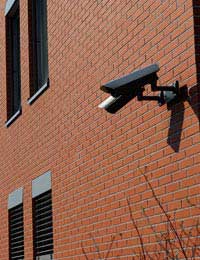
TP link Tapo c500 outdoor camera
My husband noticed it was following him around today!
Since March (when we completed our purchase) the camera has been trailed on our front door, our driveway, the gate to the driveway and our garden. We do not know if it can also audio record. It is also very close to one of the bedrooms and if it can audio record it is likely that if the window was open it could catch what we say, its about 1 meter away from our bedroom window, and 3 meters away from our front door.
We have not said anything to our neigbour, but we have stopped using the front door, and instead we enter in through the back door. I recently noticed the camera move, so it is intentionally pointing towards our door. We do not want neigbour problems, but I do know that the previous owner did not speak to their next door neigbour and that the farmer who rents the surrounding fields told us he throught she was dangerous, and the farmer didn't know that we have a camera monitoring our activities.
The neigbour has rights of access over part of our property to access theirs, but it is not their road, it is ours, and we have a gated access from the main road. Every single movement we make going out or coming into the property is being watched. We don't know if they are recording what we say too.
We are so uncomfortable with this we are no longer using our front door, and I'm thinking of having the door blocked up and moved to the other side of our pourch. The camera is also very close to our office, and I have no doubt that they will be able to hear what is said if the window is open.
We moved to a rural location becuase of harrassment from a niegbour who played loud music every time we went into our garden. Now we are being spied on. We initially though the camera was fixed and was pointed towards the gate, but there is a blue light that is on sometimes, and at others the blue light is off, but this weekend the camera moved so now we know that the camera is intentionally directed towards our front door, and it is so close it could see right into our house too.
Having spoke to the neigbour about the farmer, they appear to hate each other, the women next door seems to monitor the farmers movements on the main road and in his fields. I thought it odd that she was bothered that he drove his quade bike on the verge, I would never have even noticed that. It is clear that at least the women who lives next door enjoys watching other people, which I find both very sad as she has nothing better to do with her time than that, and very creapy too.
I want it to stop, we have discussed putting in a large tree so that it blocks the camera, but it would take years to have a tree grow tall enough to do that, and if the camera is capable of audio then that won't stop our conversations being listened into.
Any advice would be much appreciated.
Ask Problem Neighbours a question
Ask our editorial team a question and we will reply with our advice. Tell us as much about your situation as you can: the more detail you give, the more useful our answer can be.
You do not need to use your real name. Please do not include your full address, phone number, email address, or the names of other people. We may edit or remove identifying details for privacy and legal reasons.
Comments are moderated before publication.