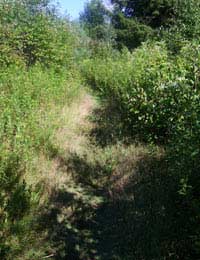
There will, however, be others that do not share the same enthusiasm when it comes to gardening, and will simply give their gardens a ‘once over’ with the lawn mower every few weeks. Then there will be the Problem Neighbours who see their gardens as an excuse to use it as a makeshift area in which to store excess rubbish.
Your Rights
Your Rights when it comes to neighbours’ gardens are governed by a number of laws. Unfortunately, the simple fact that your next door neighbour’s garden is unkempt and a bit overgrown is insufficient to enable you to take action unless it’s contravening the law.Weeds, Rubbish and Pests
If weeds or brambles and the like in a neighbour’s garden are causing problems on your side of the property boundary, it can amount to a nuisance which you can report to the Environmental Health Department of your local council who can pursue legal action. More information can be found in the Weeds Act 1959.
Rubbish which has been left piled up in a garden is also cause for concern and could attract things like rats, mice and other pests. Obviously, this then creates a health hazard, with the Risk Of Rat Infestation, as well as attracting a whole host of other unwanted pests. Once again, the Environmental Health Department can forcibly order your neighbours to get rid of any rubbish or weeds if they are breaking the law, and legal action can ensue if they fail to do so.
Taking Action Yourself
There are also strict laws on what you can and cannot do when it comes to taking action yourself. For example, you cannot trespass onto the gardens of neighbours to remove any rubbish or foliage yourself. If a neighbour’s hedge, brambles or tree are causing problems on your side of the boundary, you are entitled to prune or remove anything that encroaches onto your side of the boundary, although by law you should offer any clippings back to your neighbours.
However, when it comes to trees, some have a tree preservation order placed upon them and you can be fined if you remove anything other than dead wood. Another possible way to avoid the problem of encroaching weeds is to sink a barrier about 6in (15cm) deep along the boundary of your property.
General Guidelines
Most disputes with neighbours about the state of a garden can usually be resolved by having a polite conversation with them. In fact, most people whose gardens are a bit overgrown and unkempt are often oblivious to the fact that their garden is causing a blight on the neighbourhood, and a quiet word is often enough to get them to do something about it.
Even if there are problems which do contravene the law, it’s usually better to try to resolve the issues first by speaking to your neighbours. If, however, they fail to rectify the problem, then you should seek advice from your local authority’s Environmental Health Department who will determine if your neighbours are breaking the law and whether or not any legal action can be taken, although they'll usually try to resolve the dispute amicably by visiting your neighbours first.
Read our article on Problems with Neighbouring Trees for more information about what you can legally do.


Your email won't be published. Comments are moderated before appearing.