When children become involved in anti-social behaviour, it is often as a result of either bad parenting and/or they have simply ‘got in’ with the wrong crowd. Peer pressure can be extremely powerful when you’re young and, even though children may well have been brought up to hold decent values and to understand the concept of respect, they can still get into trouble and so blame cannot always be laid on the parents.
Nevertheless, parents themselves have a duty to try to ensure that their child is not engaging in activities deemed to be anti-social in nature or committing Criminal Offences.
Common Problems
Anti-social behaviour by children can manifest itself in a variety of ways but some of the more common problems include:
Verbal abuse, harassment and threatening behaviour
Assault
Criminal damage to shops, cars and property
Throwing missiles
Joyriding
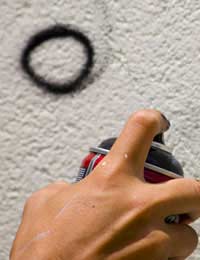
Vandalism and graffiti
Underage drinking or drug abuse
Measures to Tackle Anti-social Behaviour in Children
Although an individual member of the public cannot apply for the likes of an Anti-Social Behaviour Order (ASBO), the police, local authorities and registered landlords can, and there are also other legal measures which the relevant authorities can take. Here is a breakdown of what each course of action means.
Group Dispersal Orders
Police and local community support officers can break up a gathering of youths who might be harassing other members of the local community. They can be banned from revisiting a particular area for up to 24 hours and, if they fail to move on or return within that timescale, they can be issued with a fixed penalty notice.
In conjunction with the local authority, the police can also make certain areas out of bounds for specific groups of people by creating designated ‘no-go zones’. Here, the police have the power to take home any unsupervised children seen in the zone after 9pm.
Acceptable Behaviour Contract (ABC)
This is a voluntary agreement which is drawn up between somebody who has been involved in anti-social behaviour and the local authority or police. In signing the contract, the offender has made a commitment not to continue with any further instances of such behaviour and, if they break this contract, they can then be served with an Anti-Social Behaviour Order.
Anti-Social Behaviour Order (ASBO)
This will usually be issued if either a child has broken an ABC or where their behaviour is causing alarm or distress to others. It prevents the offender from engaging in specific anti-social activities and/or going to certain area or associating with certain named people. An ASBO can be issued to a child as young as 10 and they can last for a minimum of 2 years. You can also be arrested if you break an ASBO.
Holding Parents To Account
Although some instances of a child’s anti-social behaviour will be as a result of peer pressure, many problems arise due to bad parenting or neglect of children, yet there are measures which can be put in place to make parents more responsible and accountable for the behaviour of their children. These include:
Parenting contracts – which are voluntary agreements drawn up between the likes of schools or a local authority’s youth offending team with parents of the child in question. They are for the likes of parents whose child has been playing truant or has been expelled from school and are aimed at improving the child’s behaviour.
Parenting orders – these are issued by the court and can be used when a child has either been already convicted of a crime or when they have engaged in anti-social behaviour. They involve parents attending a course aimed at offering them guidance and advice for responsible parenting and making sure that their child goes to school, keeps away from places they are not permitted to go unsupervised, and/or for making sure that their child is at home by a particular time. They can be issued for up to a period of 12 months.
Penalty notices – schools, the police and local authorities can issue fines to the parents of a child who is playing truant. And if the parents fail to pay the fine, they can be prosecuted.
For the most part, tackling problems associated with children and anti-social behaviour is a joint effort where parents, schools, local authorities and the police all need to work together with children to educate them about moral values and respect, both for themselves and for others.
When that is achieved, anti-social behaviour by children inevitably tails off and, if it doesn’t, then some of the measures above and further measures are in place to ensure that the behaviour of a child is not allowed to blight the whole community.
Related Articles in the 'Taking Action' Category...
Kids from opposite block running around my block shouting and swearing,also kids from 2 blocks away riding bike rude attitude towards people no adults to be seen noise so bad have to keep windows and curtains closed due to my PTSD housing association are no help.what do you do to get a little peace?
Ginger13 - 19-Jun @ 8:59 PM
I am disabled. I live next to a park which has just had a change in lay out. This resulted in more balls banging against my fence. Shocks to my nervous system exasperate my condition. There were a few children who were just ridiculous in their behaviour. I said there was a sign not to play football. They didn't care. I think in parks no ball playing should be enforcable by law. These kids just laughed at me and further it escalated to having rocks thrown at my home. Because they have been spoken to by the police and yet have continued to use the park underneath the newly put up sign they are now going to be charged with harassment. But this is a seaside town and many visitors come and go.. Meaning the foot fall is high and there will be an increase in children playing ( no parents correcting them cos it seems parents feel the signs mean nothing ) .. Long and short is because of the change around of the park I am now being disturbed in my home and my health is getting/has got worse. There is nothing that can be done about children playing ball even though now I am on edge with the balls being played, my dogs now react to anything ( it started with a ball coming over and hitting me and my 1 year old granddaughter. ) In my opinion parks near housing estates shold be designed so balls can not go into peoples properties/bang on fences. I am now having to consider moving.
EmJ - 28-Jun @ 7:20 PM
Help me please l afride going outside my home with small22monts son.I scared neighbours children,they doing to mach bad behaviour but l dont have good English
Tuka - 27-Jul @ 4:15 AM
I was agressed by a group of teens in the play are for little children,jus because I asked them not to play football there.
I was intimidated and should to leave the park,even thou my little ones wanted to play there( 2 years old and other 2 months in the buggy).
When my husband tried to talk with there parents,he was also agressed by them and their teens and called him “suspect” only beacuse he looks not like an Englishman.
We are responsible european citiziens and good parents.
Now,I am scared to go outside with my little ones,only because no measures are taken by local authorities .As I know that is not first time when they behave like that with people.
How have I act in this case?!
I feel unsafe!
Conco - 18-Jul @ 7:13 AM
I live at the end of a street which is a dead end.My house is in a little block which was added to the street later and our houses have a little garden patch then a shared path and a fence on the other side of the path. However, we also own the land on other side of the fence. (There are no houses opposite). We have young adults who don't even live on this street parking up out there and using their vehicles for anti social behaviour. We also have the rest of the streets kids playing football out there and the balls constantly come in our gardens. I get that they can't be expected to know it is our land since it is other side of our fence and appears to be a continuation of the rest of the road (albeit gravelled with no kerb or pavement). However, they also treat our shared pathway like their own chase each other path. Just recently we got new neighbours next door which have teens. When they have friends visiting they will just come onto our patch (the actual garden patch, not just our part of the path) kicking up and riding scooter/bike over our stones (good job we don't have plants) and the older ones coming into our garden to smoke/vape.We also have a shared driveway at the back so they all also chase, cycle, scooter, play ball games (with and without bats) out there, running/wheel transporting/swinging bats around my car and if car not there they can be too close to my kitchen window for my comfort with bats. I have complained to the police many times, they said get council to put up no ball games signs etc, council say its not their responsibility as its private property, so told the police and they said again it is council. Yet if I privately put a sign up its not legally enforceable. I didn't want to move again, I loved this house when I bought it but what else can I do other than move?
Shez - 15-May @ 7:24 PM
I live at the end of the street, children from all over the street gather in my corner! the neighbor across the street takes other people's children, she looks after them, children fly under my window around my car, they also scream, you can't watch TV, I have to close the windows, close the blinds because the dog goes crazy. what should I do ? Who can help? I'm having surgery to remove a brain tumor. He needs peace and quiet, not stress.
Ewa - 15-May @ 12:08 PM
Hi, I live at the end of the street, children from all over the street gather in my corner! the neighbor across the street takes other people's children, she looks after them, children fly under my window around my car, they also scream, you can't watch TV, I have to close the windows, close the blinds because the dog goes crazy. what should I do ? Who can help? I'm having surgery to remove a brain tumor. He needs peace and quiet, not stress.
Ewa - 15-May @ 12:07 PM
I have recently had neighbours move in around a month ago recently all I have heard from the children is swearing all day long in the back yard what would you recommend that I should do to try resolve the issue
Sop - 9-May @ 8:13 PM
Hi, has anyone ever contacted a nuisance neighbours boss and is it legal?My nuisance neighbour works for the NHS and I think it would be beneficial to ask them to intervene and arrange a meeting so she has to sit in front of her boss and explain to us why she makes our lives a misery.I am aware of libel/slander.Looked on the internet, but cannot find an answer.
Thanks in advance
Mx
Radiolady63 - 7-May @ 6:34 PM
Has anyone came across, Neighbours upstairs have a child who is nearly 3, since this child was born, he has screamed every night, some nights for 4 1/2hrs or all through the night (I swear i have the bags under my eyes to prove it) parents either sleep through this or chose to ignore him then sleep all day whilst he runs up & down (they should have him wrapped up & at the park interacting with others) housing are as much use as a Chocolate Firegaurd. No it's not the childs fault, parents need some sort of parenting classes.I do not keep well & i have raised 2 boys & know they can be wild HOWEVER. I also know right from wrong & have respect for others. They are gamers, can hear the games music & when the male has either won,scored a goal etc by the big WOW, infact when they are not comatosed they are on American time. How a mother can just lie there when her child screams beggars belief (to me it's a mothers instinct to jump as soon as you hear your child in destress) . 1 night whilst brushing my teeth, again child screaming & they where actually asking each other to go and get him (felt like shouting 1 of you fkn get him) I feel housing just fob you off & come away with, contact Social Work as it's only hearsay from me, well it's also only hearsay at my end as i am not in their house when this is going on. I am at the end of my Tether. 23yrs in this house & never had any bother, IMO housing don't seem to care about their decent neighbours. Sorry but i had to get this off my chest
Ruthy - 18-Apr @ 1:14 AM
Jen.Answer to your comment about a village to raise a child. We're not all in villages, and it's NOT all upto the council etc. Kids where I am are being very noisy at night from 7pm To 9pm screaming and shouting, about 9 kids some age 5 6, on a communal gardens. The parents can see them but have no care or respect for the others in the flats , eg people going early to sleep to get up for work. Why can't parents ask their kids to tone it down a bit , besides I'd not let my kid out age 5screaming at night.Igor him asleep by 7 mainly.
Velma - 9-Apr @ 9:55 PM
Seriously some of the comments on here , people need to get a life? It takes a village to raise a child and if you local government fails to provide anywhere for children and teenagers to go is that their fault, if your local health fails children by not providing mental health services is that their fault? Lobby your MP’s get facilities for kids and young people in your area - stressed as you are they are also stressed living in concrete jungles or places that have absolutely no interest in their community of children . I live in a tiny rural village in Wales - couldn’t get more chocolate box and many from England and set up life with their young families- but did they invest in their community- no they invested in a new Land Rover or set of Golf clubs and their now 12-14 year oldsare hanging around with nothing to do, drinking alcohol and taking drugs yet still their eyes remain on themselves and not on their children.
Jen - 9-Apr @ 3:51 PM
I have kids come into my garden when I told them it isn't safe to play on the trampoline as it's old and coming apart I was called names and told they know my son and will beat him up had they go to the same school I honestly don't know what to do my anxiety is through the roof now help!!!
Worried - 10-Nov @ 7:13 PM
Some Indian lads who live on my road keep harrassing me. They whistle when they see me and they whistled at me and calling me pinky when I was trying to put out the bins. As soon as I heard them I went back into my house. I didn't know they were out there that time of night. Before 9pm. 1st September 2022. They've been inside all day so I didn't think they'd be out there that time of night.
Caz - 2-Sep @ 5:15 AM
Kids on my street always up to no good. Had a child hit my front door with a metal pole at half 10 last night. There's a child that does its bathroom business in the street, one neighbour has an ASBO but continues to cause trouble after being told if they start causing trouble, they have to be relocated as they are on their final warning. Kids are constantly playing knock a door run, kicking footballs at the houses, they have damaged someone's property yet Clarion and the council won't do anything. The street is a bomb site with broken toys and rubbish everywhere. It's unbearable now. Causing a lot of stress but nobody seems to want to sort the issues out. Called the police on the non emergency number and they left me a message telling me to ring back but they aren't picking up
Fionasayshi - 1-Sep @ 11:31 AM
My neighbours 17 year old daughter is walking around their back yard naked. This has been going on for the last 2 years and I have spoken to the mother as she is single. Nothing has changed and now her 15 year old son Is walking around naked as well. What can I do to stop this.
Donny - 30-Jul @ 8:39 AM
No matter what time it is the kids are knocking into my door and banging. Kick their ball into my garden, climb my wall, hitting my house windows, doors and car with the ball. They also misbehave and using threatening words. I emailed the council about this and they told me they can't help as the playground is opposite my house. I don't have problem with kids playing in the playground. I just don't want them knocking in my door anytime of the day, misbehaving using fowl language and interrupting our privacy. I don't know what to do in this situation.
Gos - 27-May @ 8:30 PM
This informtion is very out of date now.
ASB Professional - 25-Apr @ 1:04 PM
Hello I live with one family in the same flat . Parents and 3 kids . They doing a lot of noise
Houbla - 28-Jul @ 11:19 AM
For about 3 weeks now I have had neighbourhood kids playing football at the back of our block of flats. they are loud, agreesive, use foul language and kick footballs at our windows. I do not know what to do. When one of them saw me looking out my window he disappeared and then his dad came banging on my window and called me a pervert. Any advice welcome
soso - 17-Jul @ 9:03 PM
We're in a semi detached house and every night liek clockwork our neighbours son has a meltdown. He screams, swears, bangs on the walls, it wakes my two children. We have spoken to the parents and they have told us he has ADHD amongst other things. They have tried getting help from social services but to no avail. We too have gone to the environmental health, kept a diary log which is daily, nights and early mornings. Also recorded him but again they haven't done anything. We feel exhausted as it's been going on for so long now and we can't seem to get any help. Has anyone else experienced this and if so how was it resolved. I did wonder if it's because he's a minor (teenager approx 13) with mental health issues that no one was doing anything. But we can't live like this, it's impacting on our lives too.
J - 18-Jun @ 9:17 PM
hi everyone i have lived with the problem of football outside my housefor years &years its dreadful thuding ball hitting the wall shouting; hits your property they comeon your property as if its there right police dont do anything nor the housing we should all send a letter to the government ('yes the government)make them take note what we all putting up with on a daily basis. playingof football on a public highway is an offence.its so stressful ruinins your life your home should be delight to come home to not a nighrmare .
gettogether - 15-Jun @ 8:06 PM
Hi I live in London on a estate but my masonettes connected with the flats like all connectedlike cul de sac situation .even through lockdown these kids out all day but they have a new game let's see how many windows they can break with footballs they all gather outside my house I hate going into the kitchen Thier mouths are disgusting we get had a go at for looking out our windows ..we have a little kid likes playing with lighters I get it kids have to play but it proves that no parent control grows little anti social monsters there language is awfulmy neighbour told me she never comes to supervise her kids yet they instigate most of the trouble both our security gates are broken where they run bikes into them ..electric and gas boxes are smashed because of the football games windows being broken. And I don't know what to do really I have kids but they go outof the area to Thier own Freinds bit like a break from the chaos I can't even have Thier Freinds over one of the kids threatens to punch her face in in the first week we moved in .
Demps - 23-Apr @ 7:57 PM
SHAW.. CROMPTON BOWLING CLUB ... GLEBE STREET.. DUCHESS STREET.... YOUTHS DRINKING ALCOHOL. USING DRUGS. DAMAGING THE BOWLING GREEN PLAY FOOTBALL. RIDING BIKES.. THEY ARE MAKING A MESS THE OLD PEOPLE HOW RUN THE BOWLING CAN NOT AFFORD TO REPAIR THE DAMAGE THEY ARE DOING IT SO SO SAD TO SEE THE POLICE NOT DOING ANYTHING AT ALL WHEN THEY ARE CONTACTED.. IS THIS HOW WE ALLOW THE YOUNGER GENERATION TO JUST DAMAGE ANYTHING THEY WANT TO...... THERE IS SO MUCH DAMAGE THAT AS BEEN DONE TO THE BOWING CLUB AND THE GREEN.. THAT THE PEOPLE AROUND THE CLUB ARE TIRED OF PHONING THE POLICE AND CAN NOT GET THROUGH AT ALL.. WHAT HAS THE COUNTRY BECOME.. PLEASE IF YOU SEE THESE YOUTHS CONTACT THE Police ... Before they do more Damage or we will be forced to close the club and the Bowling green...
BRISBANE - 7-Feb @ 2:50 PM
CROMPTON BOWLING CLUB ... KIDS DAMAGING THE BOWLING GREEN PLAY FOOTBALL. RIDING BIKES.. THEY ARE MAKING A MESS THE OLD PEOPLE HOW RUN THE BOWLING CAN NOT AFFORD TO REPAIR THE DAMAGE THEY ARE DOING IT SO SO SAD TO SEE THE POLICE NOT DOING ANYTHING AT ALL WHEN THEY ARE CONTACTED.. IS THIS HOW WE ALLOW THE YOUNGER GENERATION TO JUST DAMAGE ANYTHING THEY WANT TO...... THERE IS SO MUCH DAMAGE THAT AS BEEN DONE TO THE BOWING CLUB AND THE GREEN.. THAT THE PEOPLE AROUND THE CLUB ARE TIRED OF PHONING THE POLICE AND CAN NOT GET THROUGH AT ALL.. WHAT HAS THE COUNTRY BECOME..
BRISBANE - 7-Feb @ 2:41 PM
Hi
Not sure what to do in this scenario, I live near to the school and from past 4 weeks I can see school kids randomly hitting/kicking our door both morning and afternoon times when they going home. I recently caught one of them but they blaming others and I have reported to the school via email and there is no response. Today I have visited the school and reported this issue to the care taker as I caught the guy who was doing but unable to take him with me. I point what is the best thing to do in this scenario and how too stop this, this is effecting my little one as he is just 2yrs and whenever he is in sleep the school kids make this issue by kicking the door.
CAN I DO MYSELF ANYTHING TO STOP THIS? ARE THEY GOING TO BE ANY LEGAL ISSUES IF I PERSONALLY INVOLVE?
Many Thanks
KK - 11-Nov @ 3:56 PM
We own our home but the housing association has bought the house next door in our row of terraced houses, we've had many families live there and we've made many friends. We now have the children from Hell moved in and it's a nightmare, both parents are unapproachable and the two girls ( 7 and 5) are running up and down the stairs crashing and banging at midnight and 0100. We've tried to contact them through the Housing Assoc. who are totally useless and not interested.....We are struggling here I personally am in bad health and my wife is also not too good! Any ideas?
Jay - 9-Nov @ 8:52 AM
I have a funny one! What if it's an adult doing it?! We have a childless couple and one of them throws stones at our fence. Admittedly, they didn't like the fence, but the behaviour for an adult 'professional' just seems pretty far gone. They don't hide it either!! We put so much into why a child might do it but what about an adult?!
Justbenice - 27-Aug @ 9:37 AM
We have recently moved to a new property and 1 of the children next door has a disability (autism) This child is alway playing in the garden as kids do but the problem I have is he is always naked.
My 16 year old daughter won’t have friends round or sit downstairs in the living room as she is embarrassed by this child.
The social work said it is not something they deal with unless the child is in danger.
Help please
Barebum - 16-Jul @ 1:36 PM
My partner and I live in a rather undesirable part of London in a house that's been converted into flats. We are on the ground floor in a 1 bed, the flat upstairs is I believe is a 2 bed flat.
We are both professionals the people upstairs don't appear to work. It's a 2 bed flat but seems to be many men living there, I've counted 7, how 7 grownups are living in a little flat is beyond me. There are also young children living there and they are the problem.
The kids are allowed to run around and jump off furniture, well, that is what the random banging and thuds sound like on my ceiling. I love children but don't want to hear them in the evenings and at times late into the night. Recently, during the this lock down the noise has become unbearable!
No one speaks English and so can't really communicate with them. It's got so my partner and I can't enjoy our evenings and weekends. Last night the constant banging and thuds screaming and shouting went on till past 2am!
My nerves are frazzled I just want some quiet! The council say they don't deal with complaints about children's noise but I think it's excessive, it's like they are literally in the next room. Do we have no redress?? Has anyone ideas what we can do? I don't think it's fair to have to listen to all this noise.
Mono Re: Your Rights Under the Noise Act 1996
We're at breaking point.
Being victimised in every way.
In our 70s with health issues.
Done everything possible but…
23 November 2025
Waterman Re: Your Rights Under the Noise Act 1996
Nils, ask them nicely to take the party indoors then, if they are not compliant, turn a hosepipe on them. Hard to press…
ProblemNeighbours Re: Your Rights Under the Noise Act 1996
@BB
That sounds incredibly disruptive, especially working from home! Don't give up on the council - environmental…
13 November 2025
ProblemNeighbours Re: Your Rights Under the Noise Act 1996
@C4
I understand the frustration with noisy neighbours, but responding with loud music usually just escalates things…
13 November 2025
yand Re: What Constitutes Noise Pollution?
we moved into our bungalow 10 years ago , and behind the bungalow has always been an unmanaged wooded area owned by the…


Re: When you Should Contact your Local Environmental Health Department
Casinos fear this slot. You’ll love it. See how! Spin to Win Here => u.to/V7stIA
Re: When you Should Contact your Local Environmental Health Department
Looking for solution to a un sightly mess in a neighbours yard . Is there a…
Re: What to do if you Suspect Your Neighbours of Drug Offences
Since about 2016 2017 when this womam divorced bought the house next door to us started…
Re: Your Rights Under the Noise Act 1996
We're at breaking point. Being victimised in every way. In our 70s with health issues. Done everything possible but…
Re: Your Rights Under the Noise Act 1996
Nils, ask them nicely to take the party indoors then, if they are not compliant, turn a hosepipe on them. Hard to press…
Re: Problems With Neighbouring Trees: Action Guide
@millie Yeah you should be able to cut anything that comes over your fence, even if it's only when it's…
Re: Your Rights on Trees & Overhanging Branches
My neighbours two trees are 30-40ft tall maybe more, we are worried they will come down in strong winds…
Re: Your Rights Under the Noise Act 1996
@BB That sounds incredibly disruptive, especially working from home! Don't give up on the council - environmental…
Re: Your Rights Under the Noise Act 1996
@C4 I understand the frustration with noisy neighbours, but responding with loud music usually just escalates things…
Re: What Constitutes Noise Pollution?
we moved into our bungalow 10 years ago , and behind the bungalow has always been an unmanaged wooded area owned by the…